
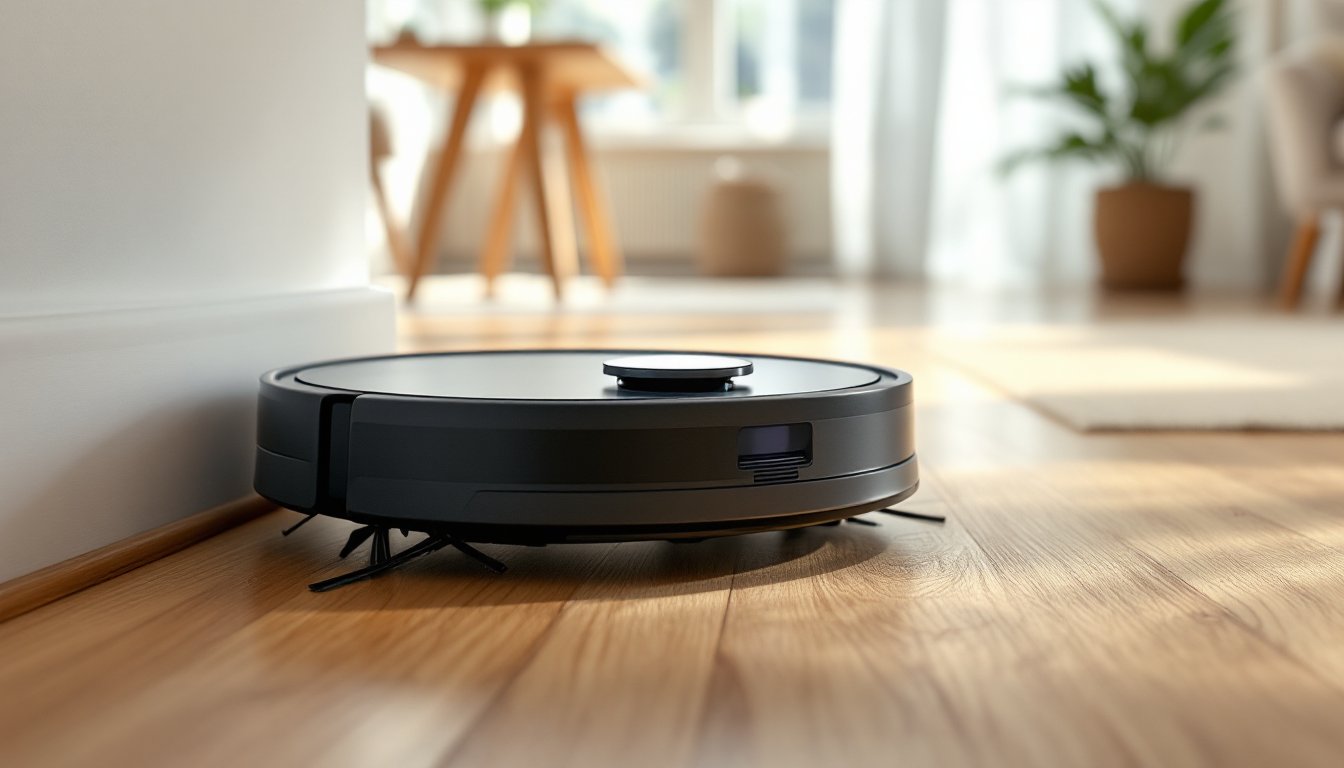
Robot vacuums have come a long way from bumping blindly into furniture. Neato carved out a reputation by doing things differently, ditching the round shape for a D-shaped chassis and using laser mapping when competitors still relied on random navigation. For homeowners juggling renovation dust, pet hair, or just the daily grind of keeping floors clean, Neato offers a methodical, corner-hugging approach that stands out in a crowded field. This guide breaks down what makes these machines tick, which models fit different homes, and how they stack up against the competition in 2026.
Table of Contents
ToggleKey Takeaways
- Neato robot vacuums use a D-shaped chassis and LIDAR laser navigation to clean edges and corners more effectively than round competitors, picking up debris that other models miss along baseboards.
- The D10 flagship model suits homes over 2,000 square feet with 150-minute runtime and 0.7-liter dustbin, while the D9 and D8 offer solid mid-range and budget options for smaller layouts.
- Neato robot vacuum models integrate with Alexa and Google Assistant, support no-go zones and multi-floor mapping, and include a combo brush designed to grab hair without excessive tangling.
- Weekly maintenance—emptying the dustbin, removing hair from the brush, and wiping the laser turret—keeps performance strong and prevents suction loss and navigation degradation.
- Neato prioritizes straightforward operation and edge cleaning over extras like mopping and auto-empty docks, making it ideal for homeowners focused on reliable floor vacuuming without paying for unused features.
What Makes Neato Robot Vacuums Different?
Neato’s core differentiator isn’t flashy, it’s geometric. While most robot vacuums follow the Roomba template of a circular body, Neato uses a D-shaped chassis that puts the vacuum’s front edge nearly flush with walls and corners. That flat front edge carries the brush closer to baseboards, grabbing debris that round models leave behind.
The second key difference is navigation. Neato was an early adopter of LIDAR (Laser Distance Sensor) technology, which spins constantly to map rooms in real time. Instead of bouncing randomly or following a basic pattern, Neato units create a 360-degree floor plan and vacuum in straight, methodical lines. This cuts cleaning time and ensures better coverage, especially in multi-room layouts with doorways and furniture.
D-Shaped Design and Laser Navigation
The D-shape isn’t just marketing. It affects how the vacuum handles edges. A round vacuum’s side brush has to sweep debris inward toward the center suction, and it often misses the last inch along walls. Neato’s flat edge positions the main combo brush (bristles plus rubber fins) right up against the baseboard, so it picks up dust and pet hair in one pass.
LIDAR navigation works like this: the vacuum emits laser pulses, measures how long they take to bounce back, and builds a distance map of the room. It knows where walls, chair legs, and thresholds are before it touches them. This means fewer collisions, less furniture bumping, and the ability to resume cleaning exactly where it left off if the battery runs low. Neato’s laser turret sits in a small dome on top of the unit, so clearance under furniture can be tighter than some competitors, most models need at least 3.9 inches of clearance to fit underneath.
Top Neato Models for Homeowners in 2026
Neato’s current lineup focuses on a handful of models, each targeting different household needs and budgets. Here’s the practical breakdown:
Neato D10: The flagship. Offers the longest runtime (up to 150 minutes on Eco mode), largest dustbin (0.7 liters), and strongest suction. It’s built for homes over 2,000 square feet with multiple floor types. If you’ve got a mix of hardwood, tile, and area rugs, or a couple of shedding pets, this is the one to consider.
Neato D9: A step down in battery life and bin size but still powerful. Runtime hovers around 120 minutes. It’s a solid middle-ground option for homes between 1,200 and 2,000 square feet. Same LIDAR system, same D-shape, slightly smaller price tag.
Neato D8: Budget-conscious pick. Cuts some smart features (like multi-floor mapping) but keeps the core navigation and shape. Good for single-story homes or apartments. Runtime is closer to 100 minutes, which covers most 1,500-square-foot layouts on one charge.
All three connect via the Neato app (iOS and Android), support no-go zones, and integrate with Alexa and Google Assistant. If you’re comparing across model years, note that Neato phased out the older Botvac line, those models (like the Connected and D7) are still in circulation on secondary markets but lack firmware updates and newer app features.
Key Features to Consider Before Buying
Not all features matter equally. Here’s what actually affects day-to-day performance:
Suction Power: Neato doesn’t publish Pascal (Pa) ratings like some brands, but real-world tests show the D10 handles fine debris (sawdust, drywall dust, baking soda) and larger particles (cereal, pet kibble) without issue. If you’re cleaning up after a sanding project or tracking in dirt from the yard, higher-end models won’t bog down.
Battery and Coverage: Runtime matters if you have a larger footprint. A 100-minute battery covers about 1,500 square feet of mixed flooring. The D10’s 150-minute runtime pushes that to 2,200+ square feet. All models return to the charging base automatically and resume where they stopped if the job isn’t finished.
Dustbin Capacity: The 0.7-liter bin in the D10 means fewer mid-clean empties, especially if you’re vacuuming daily in a high-traffic area. Smaller bins (0.5 liters in the D8) fill faster with pet hair or post-renovation debris.
Brush Type: Neato uses a combo brush, half spiral bristles, half rubber blades. The bristles agitate carpet fibers: the rubber grabs hair without tangling as badly as pure bristle brushes. You’ll still need to cut away long hair periodically, but it’s less frequent than older designs.
App and Smart Mapping: The Neato app lets you name rooms, set no-go lines (virtual boundaries), schedule cleanings, and pick Eco or Turbo modes. Multi-floor mapping (D9 and D10) saves separate layouts for upstairs and downstairs, so the vacuum doesn’t re-map every time you move it.
Filter Type: Neato uses standard pleated filters or optional ultra-performance filters for fine dust and allergens. If you’re sensitive to drywall dust or pollen, the ultra-performance version is worth the few extra bucks. Replace filters every 1-2 months depending on use.
Performance on Different Floor Types and Home Layouts
Neato handles transitions between surfaces better than entry-level robots, but there are limits.
Hardwood and Tile: This is where the D-shape and LIDAR shine. Straight-line cleaning patterns mean fewer missed spots, and the flat edge grabs dust along baseboards and under cabinet toe kicks. On refinished hardwood or polished tile, the rubber fins won’t scratch if the floor is clean of grit. Always do a manual sweep or dust mop before the first robot run to avoid dragging sand across finish.
Carpet and Area Rugs: Neato transitions onto low-pile and medium-pile carpet without trouble. Turbo mode boosts suction for embedded dirt. High-pile or shag rugs can slow it down, the combo brush gets bogged in deep fibers, and the vacuum may avoid them entirely if it detects resistance. If you have thick wool rugs, set a no-go zone and vacuum those manually.
Thresholds and Transitions: Neato clears thresholds up to about 0.8 inches (roughly 20 mm). Standard transition strips between rooms are fine. Raised hearths, thick door saddles, or uneven subfloor joints may stop it. The laser navigation system recalculates the route if it gets stuck, but it won’t force its way over an obstacle.
Multi-Room and Open Layouts: LIDAR excels here. The vacuum maps the entire floor in one session, recognizes doorways, and cleans room by room without backtracking. In open-concept spaces (kitchen flowing into living room), it treats the area as one zone unless you manually divide it in the app.
Furniture and Clutter: Neato’s flat front edge means it gets closer to chair legs and sofa skirts, but the trade-off is less maneuverability in tight clusters. If your dining room has six chairs tucked under the table, the vacuum will navigate them, but it’s slower than a round model that pivots easily. Pick up stray shoes, charging cables, and pet toys before running it, like any robot vacuum, it’ll tangle or push small objects around.
Maintenance Tips for Long-Lasting Performance
Robot vacuums live or die by maintenance. Skip it, and you’ll be shopping for a replacement in two years instead of five.
Weekly Tasks:
- Empty the dustbin after every run if you have pets or high dust. Even if it’s not full, dump it. Packed debris reduces airflow and suction.
- Pull hair and fibers off the combo brush. Flip the vacuum over, pop the brush guard, and use scissors to cut tangled hair along the brush’s length. A seam ripper (the sewing tool) works even better for sliding under tight wraps.
- Wipe the laser turret dome with a microfiber cloth. Dust on the dome clouds the sensor and degrades mapping accuracy.
Monthly Tasks:
- Replace or clean the filter. Tap it against a trash can to knock out dust, or rinse it if it’s the washable type (check your model’s manual, some aren’t). Let it air-dry completely before reinstalling.
- Clean the side brush. Pop it off (usually one screw or a friction fit) and remove hair from the bristles and axle.
- Check the charging contacts on the vacuum and base station. Wipe them with a dry cloth or a bit of rubbing alcohol on a cotton swab. Dirty contacts mean incomplete charges and mid-clean shutdowns.
Every 3-6 Months:
- Inspect the wheels. Hair wraps around the axles and reduces traction on carpet. Pull the wheels off (they snap out with light force), cut away debris, and snap them back.
- Replace the combo brush if bristles are worn flat or the rubber fins are torn. A worn brush won’t agitate carpet properly.
- Check firmware updates in the app. Neato occasionally rolls out navigation tweaks and bug fixes.
Safety Note: Always power off the vacuum before flipping it over or pulling parts. The brush motor can start unexpectedly if you bump the power button.
How Neato Compares to Other Robot Vacuum Brands
Neato sits in the mid-to-upper price bracket, competing directly with iRobot’s Roomba s9 and j7 series, Roborock’s S7 and S8 lines, and Shark’s AI models. Here’s how it stacks up:
Neato vs. iRobot Roomba: Roomba’s top models use camera-based navigation (vSLAM) instead of LIDAR. Cameras struggle in low light: LIDAR doesn’t. Roomba’s round shape is better in tight furniture clusters but worse along edges. The Roomba s9+ has stronger suction than Neato’s D10, but it’s also pricier and has a self-emptying dock (which Neato doesn’t offer as of 2026). If corner cleaning and straight-line efficiency matter more than auto-empty, Neato wins. If you want the dock convenience, Roomba’s the pick.
Neato vs. Roborock: Roborock combines vacuuming with mopping, which Neato doesn’t. Roborock’s LIDAR is similarly accurate, and some models (S8 Pro Ultra) include auto-empty, mop-washing, and obstacle avoidance. Roborock tends to have better app features (room-specific suction settings, carpet boost) and longer support cycles. Neato’s advantage is simplicity and price, if you don’t need mopping or auto-empty, you’re not paying for features you won’t use.
Neato vs. Shark: Shark’s AI Ultra models use LIDAR and include self-empty bases at a lower price point than Roomba. But, early CNET testing of older Neato models highlighted superior mapping consistency compared to budget LIDAR implementations. Shark’s navigation can be less precise in complex layouts. Neato’s build quality (especially the D10) feels more durable, but Shark offers better value if budget is tight.
Bottom Line: Neato is the choice for homeowners who prioritize edge cleaning, methodical navigation, and straightforward operation without a pile of accessories. It’s not the cheapest, not the fanciest, but it does the core job, vacuuming floors, very well. If you need mopping, auto-empty, or obstacle avoidance (for pet waste), look at Roborock or high-end Roomba. If you want a robot that maps accurately, cleans corners, and doesn’t require babysitting, Neato delivers.