
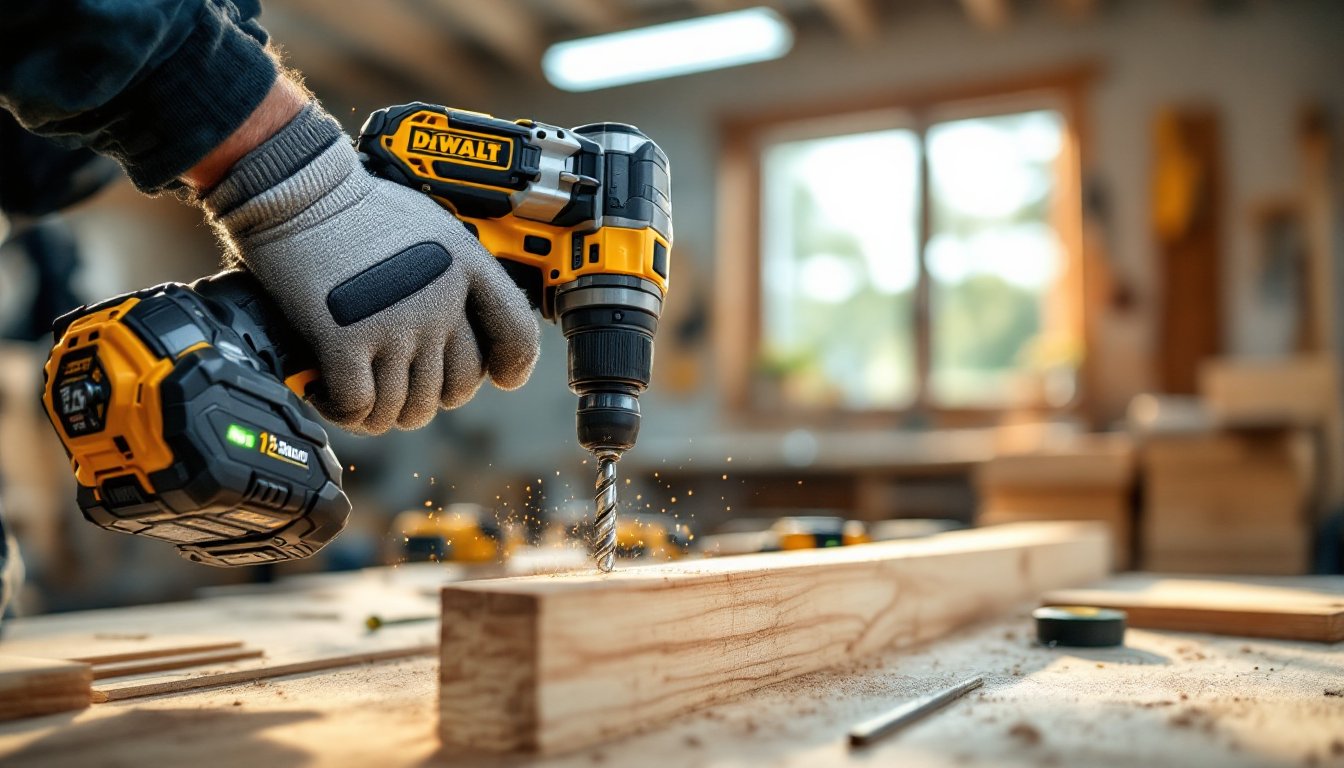
When you’re drilling lag bolts into structural lumber or boring through masonry, a budget cordless drill won’t cut it. The most powerful cordless drills deliver high torque, longer runtime, and the capability to handle demanding tasks without bogging down. This guide breaks down what separates powerful models from standard ones, reviews the top contenders for 2026, and helps match the right drill to your projects, whether you’re framing a deck or assembling heavy-duty shop fixtures.
Table of Contents
ToggleKey Takeaways
- The most powerful cordless drills combine high voltage (18V–24V) and torque (600–1,200 in-lbs) with brushless motors to handle demanding tasks like driving structural screws and drilling through masonry without stalling.
- Torque is measured in two ways—running torque (practical sustained power) and stall torque (peak force)—so prioritize running torque ratings when comparing models for real-world performance.
- Professional-grade features like electronic clutches (15+ settings), hammer-drill modes, and anti-kickback sensors reduce material damage and injury risk, making them essential for demanding projects.
- Battery ecosystem compatibility within a brand platform allows you to share batteries across multiple tools, reducing long-term costs; invest in a second 4.0–6.0 Ah battery and rotate them for all-day work.
- Project-specific selection prevents overspending: general repairs need 500–700 in-lbs, framing requires 900+ in-lbs with hammer function, and professional trades demand models with 1,000+ in-lbs torque and robust chucks.
- Permit and code compliance is mandatory for structural modifications—even with the most powerful cordless drill, consult local building departments for ledger board installation, load-bearing wall changes, and electrical/plumbing penetrations.
What Makes a Cordless Drill Powerful?
Power in a cordless drill comes down to two primary metrics: voltage and torque. Voltage indicates the electrical potential the battery supplies, higher voltage generally means more raw power for sustained drilling. Torque measures rotational force, expressed in inch-pounds (in-lbs) or Newton-meters (Nm), and it’s what actually drives the bit through material.
A drill with high voltage but low torque will spin fast but stall under load. Conversely, high torque with moderate voltage delivers the muscle needed to bore large-diameter holes or drive long fasteners without the motor straining. Most powerful cordless drills today sit in the 20V to 24V range (nominal voltage: actual is often 18V-21.6V), though some professional models reach 36V or use dual-battery configurations for extended runtime.
Voltage and Torque Ratings Explained
Voltage is often marketed in nominal terms. An 18V lithium-ion battery typically operates at 18V under load but may measure 20V at full charge, hence “20V Max” labeling. For homeowners and serious DIYers, 18V-20V platforms strike the best balance between power and weight. Professional tradespeople may opt for 24V or higher when drilling through engineered lumber, steel studs, or concrete with a hammer-drill function.
Torque ratings vary widely. Entry-level drills produce 300-400 in-lbs, adequate for drywall screws and pilot holes. Powerful models deliver 600-1,200 in-lbs or more, enabling tasks like mixing mortar, auger-boring, or driving 6-inch structural screws without pre-drilling. Manufacturers list torque in two ways: running torque (continuous) and stall torque (peak). Stall torque sounds impressive but reflects the maximum force before the motor stops: running torque is the practical number for sustained work.
Look for drills with brushless motors, they’re more efficient, generate less heat, and extend battery life compared to brushed designs. Many top-tier models also include electronic clutches with 15+ settings to prevent overdriving fasteners or stripping screw heads.
Top 5 Most Powerful Cordless Drills in 2026
Here are five standout models that deliver exceptional torque, runtime, and versatility for demanding applications. All are brushless, lithium-ion powered, and available as bare tools or kits.
- DeWalt DCD999 FlexVolt Advantage (20V/60V)
- Torque: 1,200 in-lbs (with FlexVolt battery)
- Why it stands out: Uses DeWalt’s FlexVolt technology to automatically switch to 60V when paired with a compatible battery, delivering massive torque for auger bits and hole saws. Three-speed transmission (0-450, 0-1,200, 0-2,000 RPM) lets you match speed to material. Weighs 4.7 lbs (bare tool).
- Best for: Electricians, plumbers, and framers who need maximum drilling capacity in wood and metal.
- Milwaukee 2804-20 M18 Fuel Hammer Drill
- Torque: 1,200 in-lbs
- Why it stands out: Milwaukee’s Powerstate brushless motor and Redlink Plus intelligence prevent overheating and overload. Hammer-drill mode handles masonry anchors up to 1/2″ in concrete. Compact 7.5″ length fits tight spaces.
- Best for: General contractors and DIYers tackling mixed-material projects, from deck framing to masonry.
- Makita XPH14Z 18V LXT Brushless Hammer Driver-Drill
- Torque: 1,090 in-lbs
- Why it stands out: Four-pole motor design increases torque without adding weight (3.9 lbs). Dual-speed (0-550, 0-2,100 RPM) and efficient heat management via Makita’s Extreme Protection Technology (XPT), which resists dust and moisture.
- Best for: Renovation work in demanding environments where dust and debris are constant.
- Bosch HDH183B 18V Brute Tough Hammer Drill
- Torque: 663 in-lbs
- Why it stands out: Active Response Technology (ART) uses an accelerometer to detect bind-up and shut down the motor within a fraction of a second, reducing wrist strain. KickBack Control prevents sudden rotation if the bit catches. Slightly lower torque but exceptional safety features.
- Best for: Professionals and homeowners prioritizing user safety and control, especially when drilling in unpredictable materials.
- Ridgid R86116K 18V Brushless Compact Drill/Driver Kit
- Torque: 600 in-lbs
- Why it stands out: Lifetime Service Agreement (LSA) covers the tool, batteries, and charger when registered. Compact 7.4″ head length. Lower torque than others here but solid for residential remodeling and cabinetry.
- Best for: Budget-conscious DIYers who want reliability and warranty coverage without top-tier torque.
Note: Prices fluctuate based on regional availability, sales, and whether you’re buying a bare tool or a kit with batteries and charger. Expect to pay $150-$250 for bare tools, $250-$400 for kits.
Key Features to Look for in High-Power Cordless Drills
Beyond raw torque, several features separate exceptional drills from merely adequate ones.
- Brushless motor: More efficient than brushed motors, generating less heat and extending battery life by 25-50%. Nearly all high-power models now use brushless designs.
- All-metal chuck: A 1/2-inch metal chuck grips bits securely under high torque. Keyless chucks are standard: single-sleeve designs allow one-handed bit changes.
- Multi-speed transmission: Two or three mechanical gears let you toggle between high torque/low speed (for driving large fasteners) and low torque/high speed (for drilling). Typical ranges: 0-450/0-1,800 RPM or 0-550/0-2,100 RPM.
- Electronic clutch: Adjustable settings (often 15-24 positions plus a dedicated drill mode) prevent overdriving screws. Essential for finish carpentry and cabinetry where material damage is costly.
- Hammer function: Adds percussive action for drilling into brick, block, or poured concrete. Not a substitute for a dedicated rotary hammer but useful for occasional masonry anchors.
- LED work light: Positioned near the chuck to illuminate the work surface. Some models include multiple LEDs or a spotlight mode for dark crawl spaces or attics.
- Belt clip and side handle: A metal belt clip (reversible for left- or right-hand carry) and a detachable side handle improve control during heavy drilling.
Safety note: Always wear safety glasses when drilling overhead or into masonry. Use hearing protection for extended sessions with hammer drills, and wear work gloves to improve grip and reduce vibration fatigue.
Battery Technology and Runtime
Lithium-ion batteries dominate the cordless tool market. Ampere-hour (Ah) ratings indicate capacity: a 5.0 Ah battery stores more energy than a 2.0 Ah pack, translating to longer runtime. For high-power drills, a 4.0 Ah to 6.0 Ah battery balances runtime and weight. Some brands offer 8.0 Ah or 12.0 Ah packs, but they add considerable heft, fine for stationary work, awkward overhead.
Battery compatibility within a brand’s platform is critical. Experts at Popular Mechanics emphasize that sticking to one manufacturer’s ecosystem allows you to share batteries across multiple tools, reducing long-term cost. DeWalt 20V, Milwaukee M18, Makita 18V LXT, and Ridgid 18V are mature platforms with dozens of compatible tools.
Charge time varies. Standard chargers take 45-90 minutes for a 4.0-5.0 Ah battery. Rapid chargers cut that to 30-40 minutes but generate more heat, potentially shortening battery lifespan if used exclusively. For all-day projects, invest in a second battery and rotate them.
Maintain batteries by storing them at 40-50% charge in a cool, dry place if not in use for weeks. Avoid leaving them on the charger indefinitely or discharging to zero repeatedly, both habits degrade cell chemistry over time.
How to Choose the Right Powerful Cordless Drill for Your Projects
Matching drill to task prevents overspending on features you won’t use, or underspending and struggling with inadequate power.
For general home repair and light remodeling: A drill with 500-700 in-lbs of torque handles most tasks, hanging drywall, assembling furniture, drilling pilot holes in framing lumber. A 20V platform with a 4.0 Ah battery provides ample runtime. Models like the Ridgid R86116K or entry-level Milwaukee M18 drills fit this category.
For deck building, framing, or structural work: Look for 900+ in-lbs and a hammer function if you’re setting concrete anchors for ledger boards. A two- or three-speed transmission lets you slow down for driving 3-inch screws into pressure-treated lumber or speed up for boring holes with spade bits. The DeWalt DCD999 or Milwaukee 2804-20 excel here. Homeowners at Today’s Homeowner often recommend these for weekend builders tackling larger outdoor projects.
For professional trades (electrical, plumbing, HVAC): Prioritize durability, warranty, and battery ecosystem. Electricians frequently drill through studs and joists with self-feed bits: plumbers bore large holes for PVC or copper runs. Torque ratings above 1,000 in-lbs and a robust chuck are non-negotiable. Consider models with anti-kickback sensors (like Bosch’s ART) to reduce injury risk.
For renovation and mixed-material work: A hammer drill with adjustable clutch settings adapts to wood, metal, and masonry. The Makita XPH14Z’s dust and moisture resistance is valuable in demolition scenarios.
Tool alternatives: If you’re drilling dozens of holes in concrete, rent or buy a corded rotary hammer, cordless drills with hammer modes are adequate for a few anchors but inefficient for large-scale masonry work. For precision cabinetry, a lower-torque drill/driver (400-500 in-lbs) with finer clutch increments prevents splitting delicate hardwoods.
Permit and code considerations: Structural modifications, like adding hold-downs, installing ledger boards, or altering load-bearing walls, often require permits per the International Residential Code (IRC). Consult your local building department. Electrical and plumbing penetrations must meet National Electrical Code (NEC) and IRC guidelines for notching and boring in studs and joists (typically no more than 40% of stud width, holes centered). Using a powerful drill doesn’t exempt you from these rules.
Budget tip: Buying a bare tool and pairing it with batteries you already own (if you’re invested in a platform) saves $50-$150. If starting fresh, a kit with two batteries and a charger offers better value than piecemeal purchases. Refurbished tools from reputable sources (Bob Vila occasionally reviews certified refurbs) can cut costs by 20-30% without sacrificing performance.
Conclusion
The most powerful cordless drill for your needs depends on the projects you tackle most. High torque and voltage matter when you’re driving lag screws or boring through engineered lumber, but weight, battery runtime, and safety features shouldn’t be overlooked. Invest in a model that fits your existing tool ecosystem, and don’t skimp on a second battery for all-day jobs. With the right drill, even demanding tasks become manageable.