
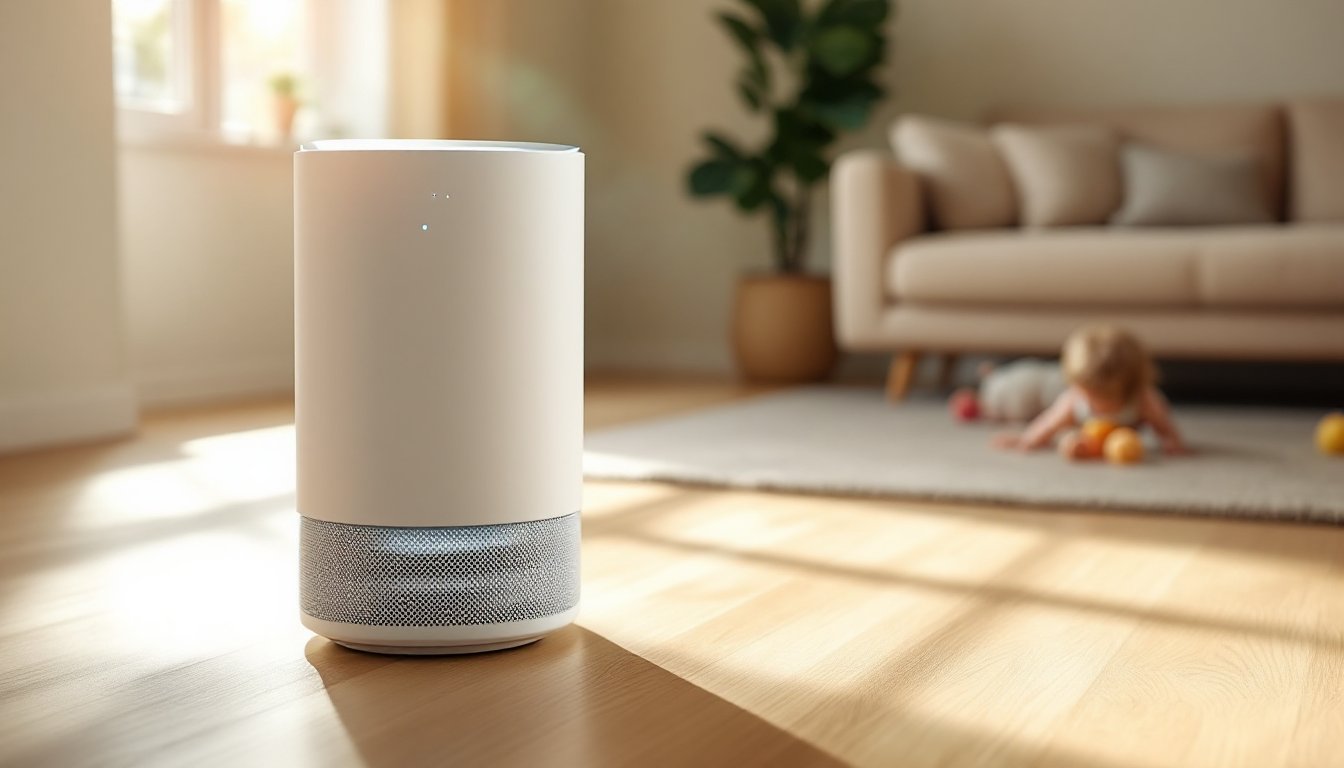
Indoor air quality isn’t just about comfort, it’s about health. As more homeowners invest in air purifiers to tackle dust, allergens, and odors, one critical detail often gets overlooked: some units generate ozone, a lung irritant that can do more harm than good. An ozone free air purifier removes airborne contaminants without producing this harmful byproduct, making it the safer choice for households with kids, pets, or anyone with respiratory sensitivities. Understanding the difference between true filtration and ozone-based “purification” can save you from unknowingly compromising your indoor air.
Table of Contents
ToggleKey Takeaways
- An ozone free air purifier uses safe filtration technologies like HEPA filters and activated carbon to remove airborne contaminants without producing harmful ozone gas that irritates the respiratory system.
- Ozone-generating purifiers marketed as ‘ionic’ or ‘activated oxygen’ pose serious health risks, especially for children, pets, and people with asthma or COPD, with even short-term exposure causing chest pain and coughing.
- HEPA filters capture 99.97% of particles down to 0.3 microns, while activated carbon effectively removes odors and volatile organic compounds, making this dual-stage combination the gold standard for safe air purification.
- When selecting an ozone free air purifier, verify CARB or UL 2998 certifications, calculate appropriate CADR rating for your room size, and budget for regular filter replacements every 6-12 months.
- Red flags indicating unsafe ozone generation include labels mentioning ‘ionizer,’ ‘corona discharge,’ or a sharp bleach-like smell during operation—always check the manual or manufacturer website before purchasing.
What Is an Ozone Free Air Purifier and Why It Matters
An ozone free air purifier uses mechanical or chemical filtration to capture particles, allergens, and volatile organic compounds (VOCs) without generating ozone gas as a byproduct. These units rely on technologies like HEPA filters, activated carbon, or UV-C light that deactivates pathogens without creating secondary pollutants.
Ozone is a reactive gas molecule (O₃) that forms when oxygen molecules split and recombine. While it’s beneficial in the upper atmosphere, ground-level ozone irritates the respiratory system, triggers asthma, and can worsen chronic lung conditions. The EPA has set a strict standard: ozone levels indoors should not exceed 0.05 parts per million (ppm) averaged over eight hours.
Some air purifiers, particularly those marketed as “ionic” or using “electrostatic precipitation”, intentionally or unintentionally produce ozone. Even units labeled as “low ozone” may emit enough to cause issues in poorly ventilated spaces or for sensitive individuals. Choosing an ozone free model eliminates this risk entirely while still delivering effective air cleaning.
For households with children, elderly residents, or anyone managing asthma or COPD, ozone-free operation isn’t optional, it’s essential. Even healthy adults exposed to elevated ozone levels over time can experience reduced lung function and increased susceptibility to respiratory infections.
The Hidden Dangers of Ozone-Generating Air Purifiers
Ozone-generating purifiers are often marketed with terms like “activated oxygen” or “pure air technology,” but these phrases obscure what’s actually happening: the device is producing a gas that the EPA classifies as a lung irritant. Some manufacturers claim ozone neutralizes odors and kills bacteria, which is technically true, but the concentration required to achieve meaningful disinfection far exceeds safe exposure limits for humans and pets.
Short-term exposure to ozone can cause chest pain, coughing, throat irritation, and shortness of breath. Long-term exposure has been linked to permanent lung tissue damage. According to comprehensive appliance testing, even purifiers that meet California’s strict ARB certification (which limits ozone output to 0.050 ppm) can still produce detectable levels in enclosed rooms.
Ionizers are a common culprit. These devices charge particles so they stick to surfaces, but the electrical discharge often creates ozone as a side effect. While some modern ionizers are engineered to minimize ozone production, older or cheaper models may not include this safeguard. If a purifier emits a sharp, bleach-like smell during operation, that’s ozone, and a red flag.
Pets are especially vulnerable. Dogs and cats spend more time close to the floor where ozone can concentrate, and their smaller lung capacity means they reach harmful exposure levels faster than humans. Birds are even more sensitive: ozone exposure can be fatal to avian respiratory systems.
If you already own a purifier and aren’t sure whether it generates ozone, check the manual or manufacturer’s website for terms like “ionizer,” “corona discharge,” or “UV-C with ozone.” When in doubt, look for CARB certification (California Air Resources Board) or UL 2998 certification, both of which verify zero ozone emission.
Best Technologies Used in Ozone Free Air Purifiers
HEPA Filtration: The Gold Standard
True HEPA filters (High-Efficiency Particulate Air) capture 99.97% of airborne particles as small as 0.3 microns. This includes dust mites, pollen, mold spores, pet dander, and most bacteria. HEPA filtration is purely mechanical, air is forced through a dense mat of randomly arranged fibers, and particles get trapped via impaction, interception, or diffusion. No ozone, no ionization, no chemical reactions.
HEPA filters are rated by their MERV (Minimum Efficiency Reporting Value) or conform to standards set by the U.S. Department of Energy. For residential use, look for filters labeled H13 or H14 (medical-grade) if you’re dealing with severe allergies or asthma. Filters should be replaced every 6–12 months depending on usage and air quality: running a clogged filter reduces airflow and efficiency.
One limitation: HEPA filters don’t capture gases, odors, or VOCs. That’s where activated carbon comes in.
Activated Carbon Filters for Odor and Chemical Removal
Activated carbon (also called activated charcoal) is treated to create millions of tiny pores, giving it an enormous surface area, up to 3,000 square meters per gram. These pores trap gas molecules through a process called adsorption, where chemicals stick to the carbon surface.
Carbon filters excel at removing:
- VOCs from paint, cleaning products, and building materials
- Cooking odors, pet smells, and tobacco smoke
- Formaldehyde and benzene (common off-gassing chemicals)
For best results, choose a purifier with a thick carbon filter (at least 5 pounds of activated carbon for a whole-room unit). Thin carbon sheets or mesh layers in budget purifiers offer minimal adsorption capacity. Some units combine carbon with potassium iodide or other additives to target specific chemicals like ammonia.
Carbon filters saturate over time, once the pores are full, they stop adsorbing. Replace them every 3–6 months, or sooner if you notice odors returning. Unlike HEPA filters, you can’t tell by looking whether a carbon filter is spent: track replacement based on usage hours or calendar date.
Together, HEPA and activated carbon create a dual-stage system that handles both particulate and gaseous pollutants without generating ozone. This combination is recommended by technology review sites for comprehensive indoor air cleaning.
How to Choose the Right Ozone Free Air Purifier for Your Home
Start with room size. Purifiers are rated by CADR (Clean Air Delivery Rate), measured in cubic feet per minute. To size correctly, calculate your room’s volume (length × width × ceiling height) and choose a unit with a CADR that can cycle that volume at least 4–5 times per hour. A 300-square-foot room with 8-foot ceilings needs a CADR of roughly 160 CFM minimum for effective filtration.
Check for certification markings:
- CARB certified or UL 2998 certified (zero ozone emission)
- AHAM Verifide (independently tested CADR ratings)
- Energy Star (efficient motor operation)
Avoid units that list “ionizer” or “UV-C” without specifying ozone-free operation. Some UV-C lamps generate trace ozone: look for models that use quartz glass sleeves and are explicitly labeled ozone-free.
Noise level matters, especially for bedrooms. Check the decibel rating at different fan speeds, anything under 50 dB on high is relatively quiet (comparable to a refrigerator hum). Units with brushless DC motors tend to run quieter than older AC motor designs.
Filter replacement cost is an ongoing expense. Budget models may have cheap upfront prices but use proprietary filters that cost $60–$80 per set. Calculate annual filter costs (HEPA + carbon) before buying. Some manufacturers offer washable pre-filters that extend HEPA life and reduce long-term costs.
For homes with multiple rooms, consider whether a single large-capacity unit or several smaller units make more sense. Central HVAC upgrades (adding a whole-home HEPA filter and UV-C system) may be more cost-effective for larger homes, but that’s typically professional-grade installation requiring ductwork modification.
Smart features like air quality sensors, auto modes, and app connectivity add convenience but aren’t essential. A purifier with a PM2.5 sensor adjusts fan speed based on real-time particle counts, which improves efficiency and filter longevity. But, manual operation with a simple on/off switch works fine if you’re willing to adjust settings yourself.
Finally, consider maintenance access. Filters should be easy to remove and replace without tools. Some units have filter-change indicators (either timer-based or sensor-based), which take the guesswork out of scheduling replacements. Follow home organization strategies by setting a recurring calendar reminder for filter checks if your unit lacks this feature.
Avoid purifiers that make exaggerated claims like “eliminates 100% of viruses” or “removes all allergens permanently.” No purifier is a substitute for proper ventilation, source control (fixing leaks, removing mold, using low-VOC materials), and regular cleaning. Think of an air purifier as one tool in a broader indoor air quality strategy.
Conclusion
An ozone free air purifier delivers cleaner air without the respiratory risks that come with ozone-generating devices. By relying on proven filtration technologies, HEPA for particles, activated carbon for gases, these units protect households from allergens, odors, and airborne contaminants safely. Size the purifier to your space, verify certifications, and budget for filter replacements. Clean air shouldn’t come with a hidden health cost.