
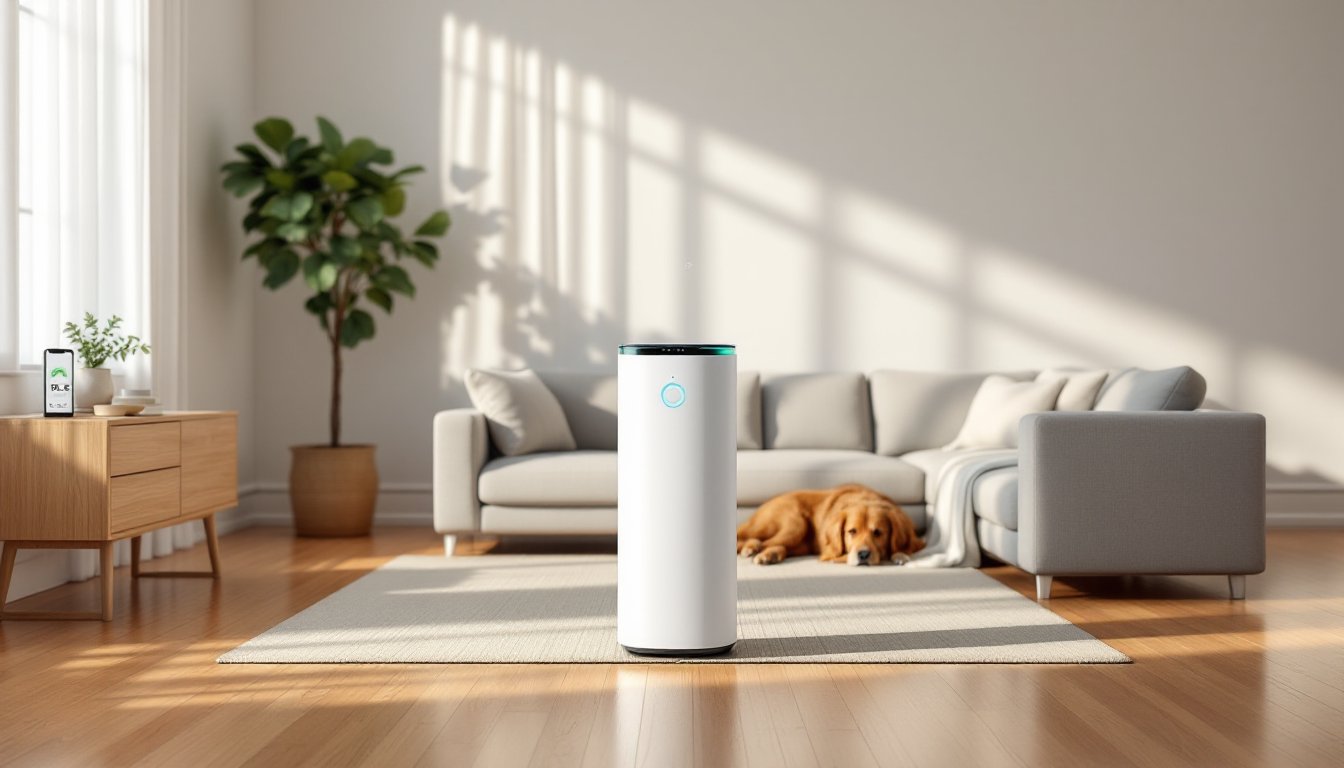
Indoor air quality isn’t just a health buzzword, it’s a real concern for homeowners dealing with pet dander, VOCs from new flooring, sawdust from shop projects, or seasonal pollen infiltration. The Levoit Core 600S is a smart air purifier designed for large spaces, combining true HEPA filtration with app-based controls and real-time air quality monitoring. It’s built for the kind of spaces where box fans and open windows don’t cut it anymore. This guide breaks down what the Core 600S delivers, where it fits in your home, and whether the investment makes sense for your indoor air needs.
Table of Contents
ToggleKey Takeaways
- The Levoit Core 600S air purifier covers up to 635 square feet with true HEPA H13 filtration that captures 99.97% of particles down to 0.3 microns, making it ideal for large rooms dealing with pet dander, pollen, and renovation dust.
- Smart app integration via VeSync enables real-time PM2.5 monitoring, scheduling, and remote control, while Alexa and Google Assistant compatibility integrates seamlessly into existing smart home ecosystems.
- Filter maintenance is affordable and straightforward: the washable pre-filter needs cleaning every 2–4 weeks, while HEPA and carbon filters last 6–8 months at roughly $50–$60 per replacement, totaling $70–$120 annually.
- Operating costs are minimal at 10W in Sleep Mode and 49W at Turbo, translating to just $3–$4 monthly for 24/7 operation, with a quiet range from 24 dB (Sleep Mode) to 50 dB (Turbo Mode).
- The Levoit Core 600S is best suited for single large rooms and targeted air quality improvement but won’t solve whole-home filtration needs or severe mold remediation without additional HVAC upgrades.
What Makes the Levoit Core 600S Stand Out for Home Use
The Core 600S isn’t trying to be a decorative countertop gadget. It’s engineered for serious air turnover in rooms up to 635 square feet (based on standard 8-foot ceilings). The unit uses a three-stage filtration system: a washable pre-filter for large particles like pet hair and dust, a True HEPA filter (H13 grade) that captures 99.97% of particles down to 0.3 microns, and an activated carbon filter for odors and VOCs, the kind you get from paint, adhesives, or new carpet.
What separates this model from cheaper alternatives is the VeSync app integration, which provides real-time PM2.5 monitoring, scheduling, and remote control. The built-in laser dust sensor continuously measures particulate matter and adjusts fan speed automatically in Auto Mode. For homeowners who’ve just finished a renovation or live in high-pollen areas, that responsiveness matters.
The unit measures 11.4 x 11.4 x 20.5 inches and weighs about 17.6 pounds, not small, but manageable for moving between a living room and bedroom. It’s CARB-certified (California Air Resources Board), meaning it doesn’t produce ozone, a concern with some ionizing air purifiers.
Key Features and Specifications
- Coverage area: 635 sq. ft. (CADR: 410 CFM)
- Filtration: Pre-filter, True HEPA H13, activated carbon
- Noise range: 24–50 dB (Sleep Mode to Turbo)
- Power consumption: 10–49W depending on fan speed
- Smart features: VeSync app, Alexa/Google Assistant compatible, air quality display
- Filter lifespan: Pre-filter washable: HEPA and carbon filters last 6–8 months under typical use
- Dimensions: 11.4″ W x 11.4″ D x 20.5″ H
The unit includes a child lock, a display-off mode for nighttime use, and a timer function. There’s no ionizer, UV-C light, or other supplemental filtration gimmicks, just mechanical filtration that works.
Performance and Coverage: Is It Right for Your Space?
The Core 600S is rated for rooms up to 635 square feet, with full air exchange (ACH) approximately five times per hour in that space. For context, that covers a large living room, a master bedroom suite, or a finished basement rec room. If you’re running it in a smaller space, say, a 300-square-foot bedroom, you’ll get even faster turnover, which is useful during allergy season or after tracking in outdoor dust from a deck build.
The CADR (Clean Air Delivery Rate) is 410 CFM for smoke, dust, and pollen. That’s competitive with units in this price bracket and notably higher than compact models under $150. In practical terms, it means the unit can handle real-world pollutants: drywall dust from a remodel, cooking smoke, or pet odors from a shedding dog.
One thing to note: coverage claims assume a single, open room. If you’re dealing with a multi-room layout or a space with high ceilings (10+ feet), performance drops. The unit won’t pull air through doorways or around corners effectively. For whole-home filtration, you’d need multiple units or an HVAC-integrated system with a MERV 13+ filter upgrade.
Auto Mode adjusts fan speed based on detected PM2.5 levels, which the smart home technology reviewers have found effective in real-world testing. You’ll see the fan ramp up when you’re sweeping up after cutting trim or cooking bacon, then dial back once particulates settle.
Smart Home Integration and App Control Benefits
The VeSync app (iOS and Android) lets you control the Core 600S remotely, check air quality history, set schedules, and monitor filter life. For homeowners who don’t want another device cluttering a countertop with buttons, the app is the primary interface, though the unit has a touch panel for manual overrides.
Scheduling is useful if you’re doing project work in the garage or workshop. Set the purifier to run at high speed during and immediately after sanding or painting, then switch to low overnight. You can also geofence it to turn on when you arrive home, which is handy if you’ve been out and the house has been closed up.
The Core 600S works with Alexa and Google Assistant. Voice commands handle power, fan speed, and mode switching. It’s not life-changing, but if you’re already neck-deep in a smart home ecosystem, it integrates cleanly.
Real-time PM2.5 readings display on both the unit and the app. PM2.5 refers to particulate matter smaller than 2.5 microns, fine dust, smoke, and pollen that penetrates deep into lungs. The unit color-codes air quality (blue = good, orange = moderate, red = poor), so you can see at a glance whether your shop dust or kitchen smoke is lingering.
One limitation: the app doesn’t track VOCs separately, even though the carbon filter addresses them. You’re relying on PM2.5 data, which doesn’t capture gasses from paint or adhesives. If you’re dealing with off-gassing from new materials, a standalone VOC meter is a better diagnostic tool.
Filter Maintenance and Long-Term Operating Costs
The pre-filter is washable and should be cleaned every 2–4 weeks depending on dust and pet hair load. Rinse it under a tap, let it air dry completely (don’t reinstall it damp), and snap it back in. This takes maybe five minutes and saves you from buying replacements.
The HEPA and carbon filters are combined in a single cylindrical cartridge. Levoit rates it for 6–8 months of typical use, but that varies widely. If you’re running the unit 24/7 in a dusty environment, say, during a renovation, expect closer to 4–5 months. The app tracks filter life and sends a replacement reminder based on runtime and air quality.
Replacement filters run about $50–$60 for the official Levoit cartridge. Off-brand options exist but aren’t always H13-certified, so you’re gambling on filtration efficiency. At roughly $70–$120 per year in filter costs, the Core 600S is on the affordable end for a unit this size.
Energy consumption is low: 10W in Sleep Mode, 49W at Turbo. Running it 24/7 at medium speed (around 25W) costs roughly $3–$4 per month in most U.S. markets at $0.13/kWh. That’s less than a standard ceiling fan.
Filter replacement is tool-free. Twist the bottom housing counterclockwise, pull out the old filter, drop in the new one, and twist to lock. The unit prompts a filter reset in the app after installation. No screws, no clips, designed for quick swaps.
One heads-up: don’t skip filter changes. A clogged HEPA filter tanks airflow and forces the motor to work harder, shortening its lifespan and increasing noise. When the app says replace, replace.
Real-World Performance: Noise Levels and Energy Efficiency
Noise output is a make-or-break factor for air purifiers, especially in bedrooms. The Core 600S runs at 24 dB in Sleep Mode, which is quieter than a whisper and unnoticeable unless you’re in a dead-silent room. At medium speed (Level 2), it’s around 35–40 dB, comparable to a refrigerator hum. Turbo Mode hits 50 dB, which is noticeable but not jarring. You’ll hear it, but it’s not as loud as a bathroom exhaust fan.
For comparison, recognized cleaning award winners in this category tend to fall in the same noise range. If you’re sensitive to white noise, Sleep Mode is genuinely usable overnight. If you’re running it during the day while working in the shop or kitchen, even Turbo Mode won’t drown out conversation.
The fan uses a brushless DC motor, which is more energy-efficient and longer-lasting than older AC motors. At full tilt, the unit draws 49W, less than a standard incandescent bulb. That efficiency matters if you’re running it continuously, which is the recommended approach for consistent air quality.
One design note: the air intake is 360-degree around the base, and the exhaust is top-mounted. That means you need clearance on all sides, at least 15 inches from walls or furniture. Tucking it into a corner or behind a couch chokes airflow and reduces effectiveness. Place it in an open area, ideally central to the room, for best circulation.
The display dims automatically in Sleep Mode, but if even that faint glow bothers you, you can turn the screen off entirely via the app or touch panel. No blinking LEDs, no obnoxious indicator lights, just a dark, quiet box doing its job.
Who Should Consider the Levoit Core 600S for Their Home
This unit makes sense for homeowners dealing with persistent indoor air quality issues that basic ventilation doesn’t solve. If you’re in a high-pollen area, live with pets, or regularly do dusty DIY work (sanding, cutting, drywall finishing), the Core 600S handles the aftermath effectively.
It’s also a solid choice if you’ve recently renovated and are dealing with off-gassing from new materials, paint, flooring adhesives, caulk, or cabinetry. The activated carbon filter won’t eliminate VOCs overnight, but it helps reduce odors and chemical concentrations faster than just airing out the space.
For homeowners with allergies or asthma, the H13 HEPA filter captures the fine particulates that trigger symptoms: pollen, mold spores, dust mite debris, and pet dander. Pair it with regular HVAC filter changes (upgrade to at least MERV 11 if your system supports it) and you’ll notice a difference.
If you’re comparing models, the Core 600S sits in the mid-range: more capable than compact units under $150 but less expensive than commercial-grade units that run $500+. It’s not a whole-home solution, but for a single large room, it’s effective and reasonably priced at around $250–$280 retail.
Skip it if: You need whole-home filtration (consider an HVAC upgrade instead), you’re dealing with mold remediation (that requires source removal and possibly professional help), or you’re expecting it to eliminate strong chemical odors from solvents or oils (carbon filters help, but they’re not magic).
Bottom line: the Core 600S is a reliable workhorse for homeowners who want measurable air quality improvement without diving into professional smart home setups or industrial-grade equipment. It’s well-suited for real-world use in living spaces where dust, dander, and odors are ongoing concerns, not just seasonal annoyances.