
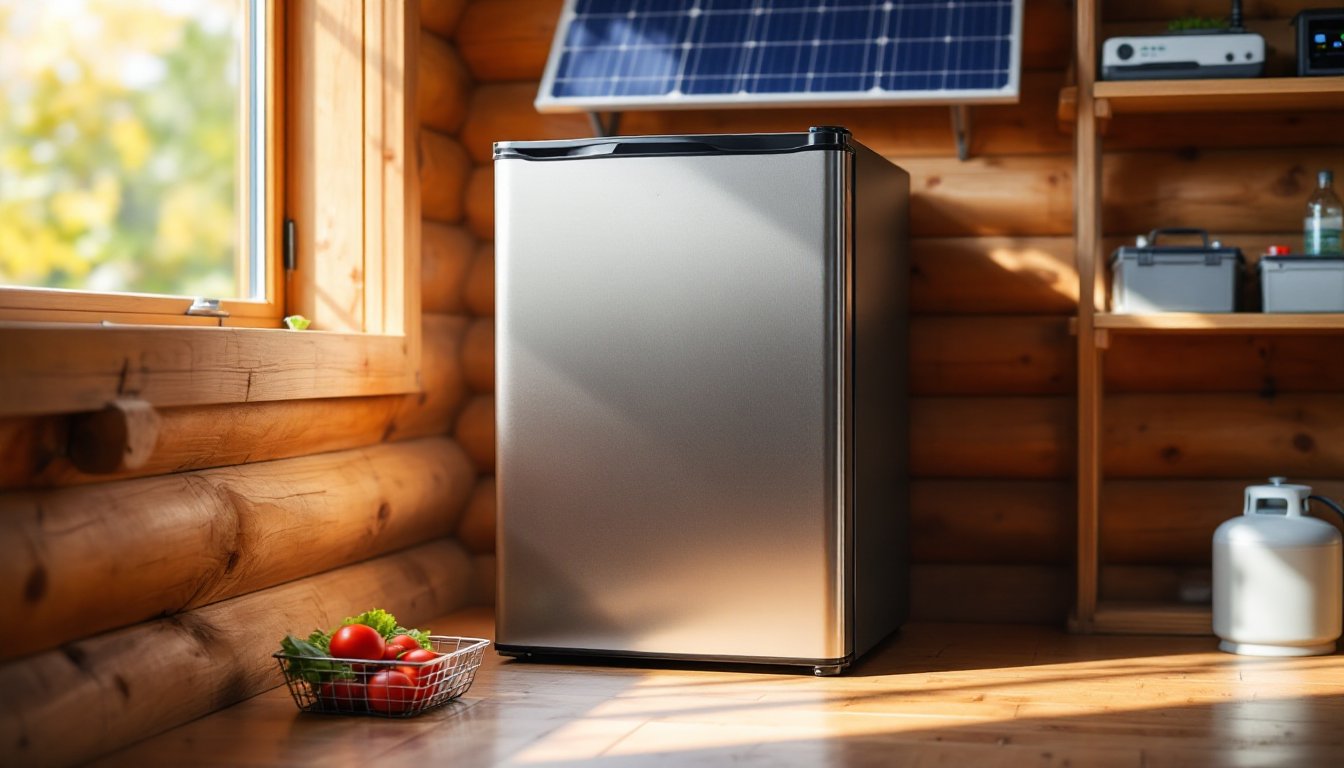
Living off the grid doesn’t mean living without cold beer or fresh vegetables. An off grid refrigerator keeps food safe and drinks cold without relying on the utility company, whether you’re in a remote cabin, building a sustainable homestead, or just want backup during power outages. These appliances pull power from solar panels, propane, or other independent energy sources instead of traditional AC outlets. Understanding how they work, which type fits your situation, and how to set one up correctly makes the difference between reliable refrigeration and spoiled groceries.
Table of Contents
ToggleKey Takeaways
- Off grid refrigerators operate independently from utility power using solar, propane, or battery systems, consuming 30-60 watts when running compared to 150-400 watts for standard refrigerators.
- Solar-powered refrigerators require 200-400 watts of solar panel capacity and 200-400 amp-hours of battery storage for year-round reliability, while propane models cost $350-$700 annually in fuel.
- Size your off grid refrigerator to actual household needs—a 5-7 cubic foot unit serves 2-3 people adequately, as every additional cubic foot increases energy demand by 15-20%.
- Proper installation placement in cool areas with 3-6 inches of clearance around the compressor, correct leveling, and appropriate electrical connections directly impact energy efficiency and appliance longevity.
- High-quality insulation (2.5-4 inches minimum), Danfoss/Secop compressors, thick gaskets, and solid construction separate reliable off grid units from models prone to failure.
- Off grid refrigeration eliminates vulnerability to power outages, reduces monthly operating costs to near-zero with solar after initial investment, and supports sustainable living goals aligned with energy independence.
What Is an Off Grid Refrigerator and How Does It Work?
An off grid refrigerator operates independently from the electrical grid, using alternative energy sources like solar power, propane, or DC battery systems. Unlike standard refrigerators that draw 3-7 amps at 120V AC, off grid models are engineered for extreme energy efficiency, typically pulling 1-3 amps at 12V or 24V DC.
Most off grid refrigerators use compressor-based cooling systems similar to household units but optimized for low power draw. The compressor cycles on and off based on interior temperature, consuming watts rather than hundreds. A typical 12V DC compressor fridge draws 30-60 watts when running, compared to 150-400 watts for a standard AC refrigerator.
Other models rely on absorption cooling, which uses heat from propane flames or electric heating elements to drive a chemical refrigeration cycle. These have no moving parts and run silently, making them popular in RVs and remote installations. They’re less efficient than compressor models but can run on multiple fuel sources.
Insulation plays a critical role. Off grid units typically feature 2-4 inches of high-density polyurethane foam insulation, significantly thicker than standard appliances. This keeps cold air in and reduces the compressor’s workload. Better insulation means longer intervals between cooling cycles, which directly translates to lower energy consumption.
The refrigerant system, whether compressor or absorption type, must handle temperature swings common in off grid settings. Many units operate effectively in ambient temperatures from 32°F to 110°F, though performance drops at extremes.
Why You Need an Off Grid Refrigerator for Your Home
Grid dependence creates vulnerability. A standard refrigerator loses safe food storage temperatures within 4 hours of power loss, according to USDA guidelines. Off grid refrigerators eliminate that risk entirely by running on independent power systems.
For remote properties without utility connections, off grid refrigeration isn’t optional, it’s the only practical solution. Running power lines costs $15,000-$50,000 per mile in most regions, making grid connection prohibitively expensive for rural builds. A solar-powered refrigerator with battery backup solves the problem for a fraction of that cost.
Energy independence reduces monthly operating costs. A typical household refrigerator consumes 300-800 kWh annually, costing $40-$100 depending on local rates. An efficient 12V DC refrigerator might use 180-300 kWh yearly, and when paired with solar panels, the operating cost drops to near zero after initial investment.
Disaster preparedness matters. Extended power outages from storms, wildfires, or grid failures leave conventional refrigerators useless. Off grid units continue operating through emergencies, preserving medications, food supplies, and normalcy when neighbors are throwing out spoiled groceries.
Sustainable living goals align naturally with off grid refrigeration. Pairing these appliances with renewable energy reduces household carbon footprint and moves toward energy self-sufficiency. For those building net-zero homes or transitioning to sustainable lifestyles, off grid refrigerators represent a practical step toward independence.
Types of Off Grid Refrigerators: Finding the Right Fit
Choosing between solar and propane systems depends on energy availability, budget, and maintenance preferences. Each type has distinct advantages and limitations.
Solar-Powered Refrigerators
Solar refrigerators run on DC power from photovoltaic panels, either directly or through battery banks. Most operate on 12V or 24V systems, matching standard off grid electrical setups. A typical 5-cubic-foot solar refrigerator requires 40-80 watts during operation, cycling on roughly 8-12 hours daily depending on ambient temperature and door openings.
The complete system needs three components: solar panels, a battery bank, and a charge controller. Plan for 200-400 watts of solar capacity to reliably run a small refrigerator year-round, accounting for cloudy days and seasonal sun angle variations. Battery storage should provide 24-48 hours of operation without sun, typically 200-400 amp-hours at 12V.
Compressor-driven solar fridges dominate the market. Brands like SunDanzer and Unique use variable-speed compressors that adjust power draw based on cooling demand. These units handle frequent door openings better than absorption models and maintain more consistent temperatures.
Installation requires proper ventilation. Position the unit away from heat sources and ensure 2-3 inches of clearance around the compressor housing. Many off grid builders integrate solar refrigerators into modern sustainable home designs that prioritize energy efficiency and environmental responsibility. Mount solar panels with southern exposure (in northern hemisphere) at an angle matching your latitude for optimal year-round performance.
Solar systems excel in sunny climates but struggle during extended cloudy periods without adequate battery backup. They require no fuel delivery and have minimal recurring costs once installed.
Propane and Gas Refrigerators
Propane refrigerators use absorption cooling cycles powered by burning LP gas. A typical unit consumes 1.5-2.5 pounds of propane daily, or roughly 550-900 pounds annually. At current propane prices ($2.50-$4.00 per gallon), annual fuel costs run $350-$700.
These units require proper venting to exhaust combustion byproducts safely. Install them against an exterior wall with a direct vent system that pulls combustion air from outside and exhausts there as well. Never vent propane appliances into living spaces, carbon monoxide poisoning is a real risk. Most jurisdictions require professional installation and inspection of gas appliances, so factor permit costs and licensed contractor fees into your budget.
Absorption refrigerators work reliably in off grid scenarios where product reviews and tested recommendations emphasize dependability over efficiency. They’re silent, have no moving parts to break, and operate independently of weather or sunlight. The tradeoff is lower efficiency, they generate significant waste heat and consume more energy per BTU of cooling than compressor models.
Propane units must be level within 2-3 degrees for proper operation. The absorption cycle relies on gravity-driven fluid flow, and off-level installation causes poor cooling and potential permanent damage. Use a torpedo level during installation and check periodically if installed in a mobile application like an RV or trailer.
Dual-fuel models run on propane or AC power, offering flexibility for part-time off grid situations. These cost more upfront but let you switch between fuel sources based on availability and cost.
How to Choose the Best Off Grid Refrigerator for Your Needs
Size your refrigerator to actual needs, not wishful thinking. Off grid living rewards efficiency. A 5-7 cubic foot unit serves 2-3 people adequately with meal planning. Larger families need 10-12 cubic feet, but every additional cubic foot increases energy demand roughly 15-20%.
Energy consumption figures matter more than any other specification. Look for units drawing 40-80 watts during operation with well-insulated cabinets that minimize run time. Check the manufacturer’s daily watt-hour consumption rating, quality units specify 300-700 Wh/day depending on size. Multiply by 365 to estimate annual consumption, then size your power system accordingly.
Compressor type affects performance and longevity. Danfoss/Secop compressors dominate the quality off grid market, known for low power draw and long service life. These variable-speed units adjust output to cooling demand rather than cycling on and off at full power. Cheaper fixed-speed compressors work but consume more energy and wear faster.
Build quality separates reliable units from money pits. Check for:
• Gasket quality – thick, pliable door seals without gaps
• Insulation thickness – 2.5-4 inches minimum in walls and door
• Hinge construction – metal hinges with replaceable pins, not plastic
• Interior materials – rust-resistant coated steel or food-grade plastic
• Thermostat accuracy – adjustable with clear temperature markings
Warranty coverage reveals manufacturer confidence. Look for minimum 2-year comprehensive warranties on the sealed refrigeration system and 1 year on electronics. Compressor warranties should extend 3-5 years, that’s the most expensive component to replace.
Climate matters. If you’re building in hot regions, choose units rated for high ambient temperatures (up to 110°F). Some budget models fail when surrounding air exceeds 90°F. Discussions about off-grid living challenges often highlight how extreme temperatures affect appliance performance.
Freezer capacity varies widely. Some off grid refrigerators include small freezer compartments (1-2 cubic feet), while others are refrigerator-only. Dedicated chest freezers are more efficient than upright models but require separate power budgeting.
Avoid refrigerators with unnecessary electronics. Ice makers, digital displays, and interior lighting add power draw without meaningful benefit in off grid contexts. Simple mechanical thermostats and manual defrost models reduce failure points and energy consumption.
Installation and Setup Tips for Off Grid Refrigerators
Location determines efficiency. Position the refrigerator in the coolest area available, away from direct sunlight, wood stoves, and heat-generating appliances. Every 10°F increase in ambient temperature increases energy consumption by roughly 20%. If possible, place it on an interior wall with north exposure.
Ventilation is non-negotiable. Compressor refrigerators expel heat that must dissipate freely. Allow minimum 3 inches clearance on sides and 6 inches behind the unit. In tight spaces, install a small 12V cooling fan to move air across the compressor housing, a $15 fan can improve efficiency by 10-15% in confined installations.
Leveling matters for both compressor and absorption models, though absorption units are more sensitive. Use a quality level and shim the unit until bubble-center in both directions. Recheck level after 24 hours when weight settles on flooring.
Electrical connections must handle the load without voltage drop. For 12V DC systems, use 10 AWG wire for runs up to 10 feet, 8 AWG for 10-20 feet. Voltage drop kills compressor efficiency, aim for less than 3% drop under load. Install an inline fuse rated 1.5x the refrigerator’s maximum draw within 6 inches of the positive battery terminal.
Battery-powered systems need proper charge management. Connect the refrigerator to a dedicated battery bank through a low-voltage disconnect (LVD) set to cut power at 11.5V for flooded lead-acid or 12.0V for lithium batteries. This prevents damaging deep discharge while protecting food if batteries deplete.
Solar controllers should be MPPT type (Maximum Power Point Tracking) for 20-30% better efficiency than PWM controllers. Size the controller to handle maximum panel output plus 20% headroom. A 400-watt solar array needs a 30-40 amp MPPT controller on a 12V system.
Propane installations require professional work in most jurisdictions. Local codes typically mandate:
• Gas line pressure testing before connection
• Proper venting through exterior walls with specified clearances
• Carbon monoxide detectors within 10 feet of the appliance
• Inspection and permitting by local building authority
Don’t skip permits on gas appliances. Besides the legal issues, insurance claims for fire or CO poisoning get denied on unpermitted installations.
Pre-cooling before stocking saves energy. Run the empty refrigerator for 24 hours to reach target temperature, then stock it with already-cold items if possible. Cooling warm groceries demands 3-5x more energy than maintaining cold ones.
Monitor performance for the first week. Install an inexpensive watt meter (Kill-A-Watt for AC, DC ammeter for 12V systems) to verify actual consumption matches specifications. If the unit runs constantly or draws excessive power, check door seals, ventilation clearance, and ambient temperature before assuming equipment failure.